Health and Safety Policy for Landscapers Chessington
 This health and safety policy sets out how landscaping services in Chessington are planned and delivered with care, consistency, and respect for everyone involved. Our approach supports safe working practices across a range of outdoor tasks, from garden clearance and turf work to maintenance and site tidying. We believe that preventing harm is always better than reacting to it, so safety is built into daily routines, equipment use, and supervision.
As a landscaper in Chessington, we understand that every site presents different conditions. Uneven ground, weather changes, tools, plant material, and moving vehicles can all create risks. For that reason, our policy focuses on assessing hazards before work begins, keeping work areas organised, and making sure all team members follow safe methods. This is especially important when providing garden and grounds care in residential or commercial settings where the public may be nearby.
We also aim to deliver a dependable and professional landscaping service with a practical safety culture. That means using well-maintained equipment, selecting suitable protective gear, and making sure tasks are carried out by trained workers who understand the correct procedures. Whether the job involves hedge cutting, soil movement, or general outdoor upkeep, safety remains a core requirement rather than an afterthought.
Responsibilities and Safe Working Standards
 Every worker is expected to take reasonable care of their own safety and the safety of others. This includes following instructions, reporting defects, and not using equipment unless it is suitable and in good condition. Supervisors are responsible for checking that work is properly planned, that hazards are reviewed, and that tasks are assigned according to skill and experience.
Landscaping safety depends on clear communication. Before starting a task, team members should understand the work area, the sequence of activities, and any risks linked to tools, machinery, chemicals, or manual handling. Where necessary, boundaries should be set so that members of the public, children, pets, or other site users are kept clear of active work zones.
Personal protective equipment is used where appropriate and may include gloves, boots, eye protection, hearing protection, high-visibility clothing, or dust masks. Equipment must be inspected before use, stored securely, and cleaned after tasks are completed. Safe handling of fuels, oils, and other materials is required at all times, with spills dealt with promptly to reduce risk and environmental impact.
Risk Control in Everyday Landscaping Work
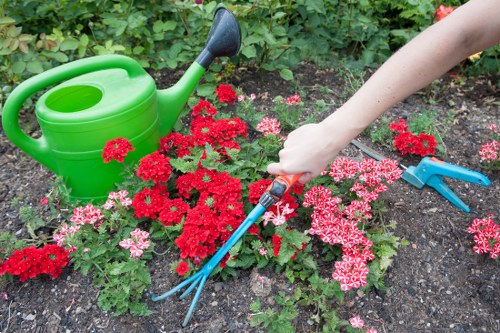 Risk assessment is a central part of our landscaper health and safety policy. Before work begins, we consider ground conditions, weather, access routes, overhead hazards, and the presence of fragile surfaces or hidden obstacles. Where needed, we adjust the plan so that work can continue safely without unnecessary disruption.
Manual handling is managed carefully because landscaping often involves lifting bags, moving tools, shifting waste, and repositioning materials. Workers are encouraged to use safe lifting techniques, team lifts for heavier loads, and mechanical assistance where practical. Repetitive tasks are also monitored so that fatigue does not lead to poor posture or reduced concentration.
Tool and machinery safety is equally important. Blades, cutters, trimmers, mowers, and powered equipment should only be used by competent workers following manufacturer instructions and site-specific precautions. Guards must remain in place, damaged items must be removed from service, and power sources should be isolated before cleaning, adjusting, or carrying out maintenance.
Welfare, Environment, and Incident Reporting
We recognise that safe working conditions also depend on basic welfare. Workers should have access to suitable rest breaks, drinking water, and a clean place to store personal items when required. In hot weather, cold weather, or wet conditions, work methods may be adjusted to reduce the chance of strain, slips, dehydration, or other avoidable harm. Good housekeeping is also part of welfare, because tidy areas reduce the likelihood of trips and falls.
Environmental care is closely linked to our landscaping service safety standards. Waste should be sorted and removed responsibly, with materials kept out of access routes and public spaces. We aim to minimise unnecessary disturbance, avoid damage to existing planting or structures, and handle green waste in a way that supports a neat and controlled site. This rubbish removal approach helps maintain safe conditions while keeping outdoor areas orderly.
Any accident, near miss, dangerous occurrence, or equipment failure must be reported as soon as possible so it can be reviewed and appropriate action taken. Incident reporting helps us learn from events, improve procedures, and prevent recurrence. Where necessary, work will stop until the hazard is controlled. We treat reporting as a positive duty because it supports safer outcomes for workers, clients, and the public alike.
Training, Monitoring, and Policy Review
 Training is essential to maintaining high standards across all landscaping activities. New workers are introduced to safe systems of work, expected conduct, emergency arrangements, and the correct use of equipment. Refresher training is provided where tasks change, risks increase, or improvements to practice are identified. This helps maintain a confident and competent team.
Supervision and monitoring are used to check that the policy is being followed in real working conditions. Site observations, equipment checks, and regular reviews help identify areas where extra support may be needed. We value a practical approach: if a method is not safe, it is changed before work continues. This keeps the landscaping company safety policy active and relevant.
At intervals, the policy is reviewed to make sure it remains suitable for the type of work carried out and the risks likely to be encountered. Changes in equipment, working methods, regulations, or operational needs may require updates. Our goal is to keep the policy clear, workable, and focused on real-world safety for every project.
Commitment to Safe Landscaping Practices
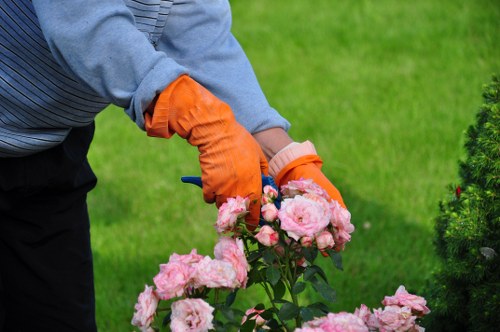 This policy reflects a straightforward commitment to responsible working standards across all landscapers Chessington services. By planning carefully, using equipment correctly, managing waste safely, and encouraging open reporting, we create a safer environment for workers and site users. Safety is not separate from quality; it is part of delivering reliable outdoor work with care and professionalism.
Landscaping safety succeeds when everyone understands that small actions matter: keeping walkways clear, lifting correctly, checking tools, and staying alert to changing conditions. Through consistent practice and regular review, we support a safer service that protects people, property, and the wider working environment.

